
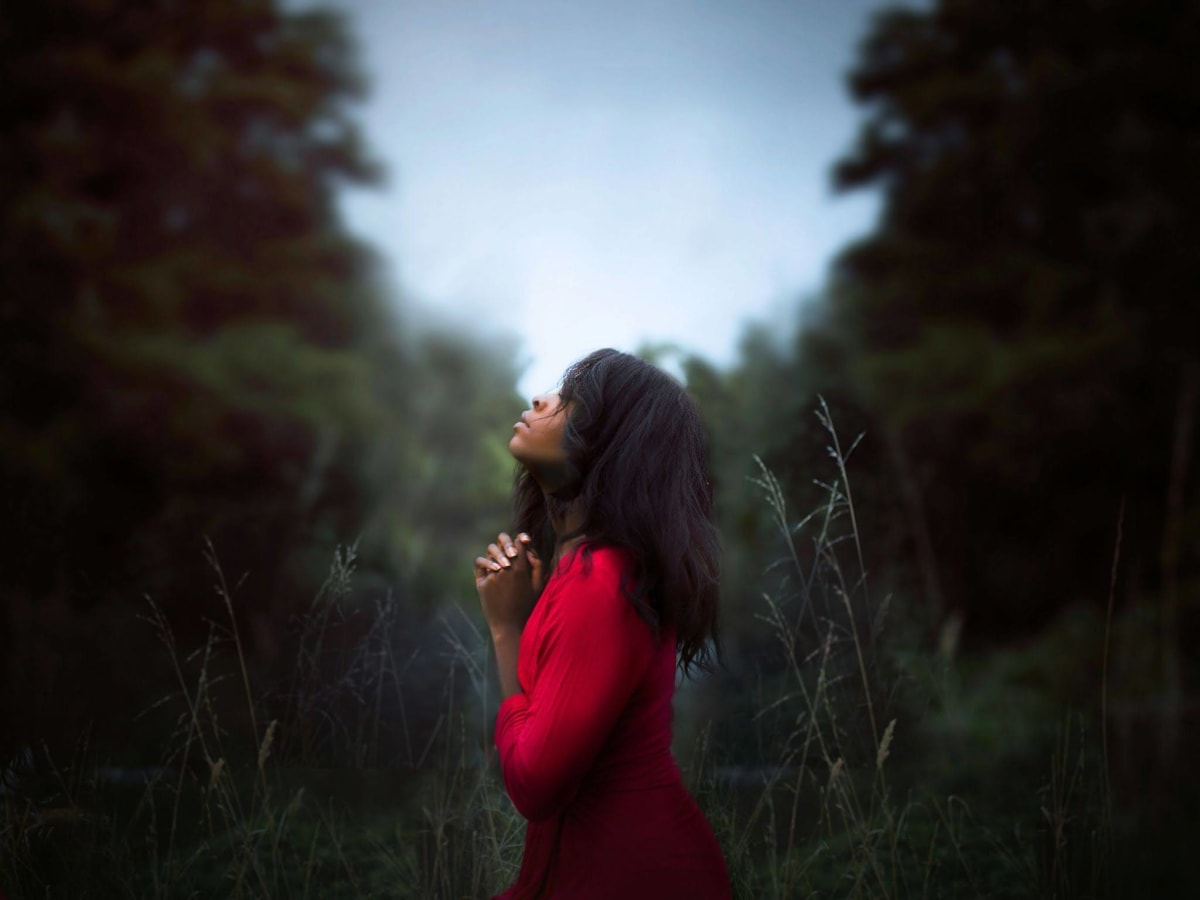
Rejoice always, pray continually, give thanks in all circumstances; for this is God’s will for you in Christ Jesus. (1 Thessalonians 5:16-18)
Last Sunday in worship, Pastor Jason led a prayer that, in his words, was “very un-Presbyterian.” Going off the theme of Psalm 13 and the message, he asked for us to think if we had a personal “how long, O Lord” struggle, and then stand so we could pray for those around us. It was heartening to see so many folks stand and share in the cry of “why is this going on, God?!” It showed me that we are a community that trusts in the Lord and the power of prayer.
So, what is the right way to pray? The Bible gives some guidelines (Matthew 6:5-13). I have been in discussion over what makes prayer authentic or inauthentic, and what language should be used while addressing God in worship and in our personal prayers. Denominations have preferences. People have opinions.
In his book The Jesuit Guide to (Almost) Everything, James Martin, SJ, recounts a story from his friend, David. David had just returned home from seminary and was trying to teach his mom how to engage in really meaningful prayer. For all her life, she had prayed the Rosary (a combination of reciting the “Hail Mary” prayer, the Lord’s Prayer and the Gloria Patri). To David, this felt too pedestrian. So he asked, “What happens when you pray the Rosary?” Her answer stopped him in his tracks. “Well, I quiet myself down,” she said, “and then I look at God, and God looks at me.”
A few things I glean from this story. First, there is no type of prayer that is better than another. God wants to hear all our prayers, and you do not have to have a seminary degree to have a meaningful and mature prayer life. Second, prayer is like a conversation. You talk to God and you listen to God. God may not respond as soon as, or in the way, you wish. But trust that God is listening. Third, people respond to different types of prayer.
When my friend, Chris Cook, was on staff at the church, he led centering prayer weekly in the chapel. As hard as I tried, I could not get into it. I appreciated and respected the purpose of centering prayer, but it was not going to be a practice I implemented often in my own spiritual life. Does that mean I am bad at praying? Or that centering prayer is worse than other types of praying? Absolutely not.
There are many ways to pray. If you are looking for some ideas on ways to pray, here is an online resource titled “Practicing Prayer.” No matter how you choose to pray, heed the words of Paul and “pray continually, giving thanks in all circumstances.”
Elizabeth Virkler